STAIRBOTICS
  1. The need
  2. The software
  3. The cell
  4. The roadmap
  5. See it running
Stairbotics
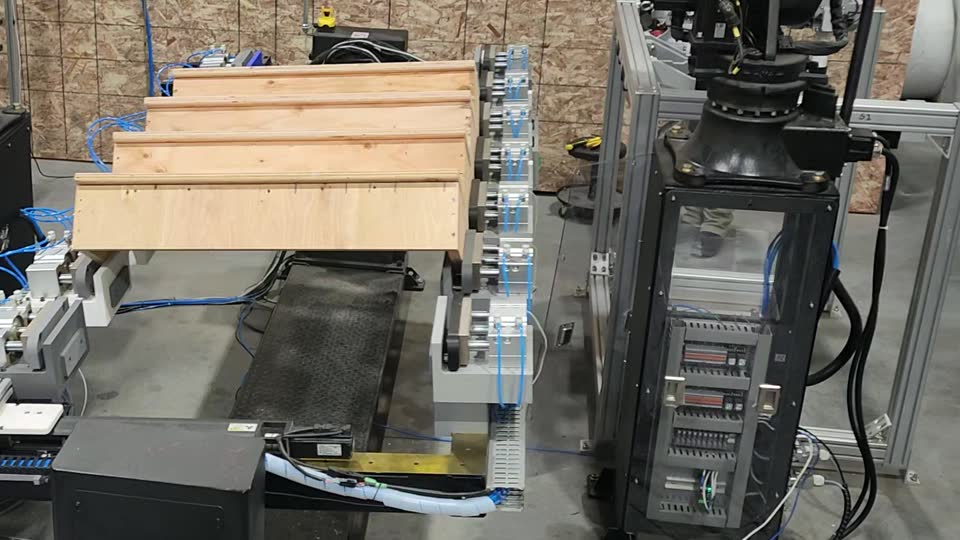
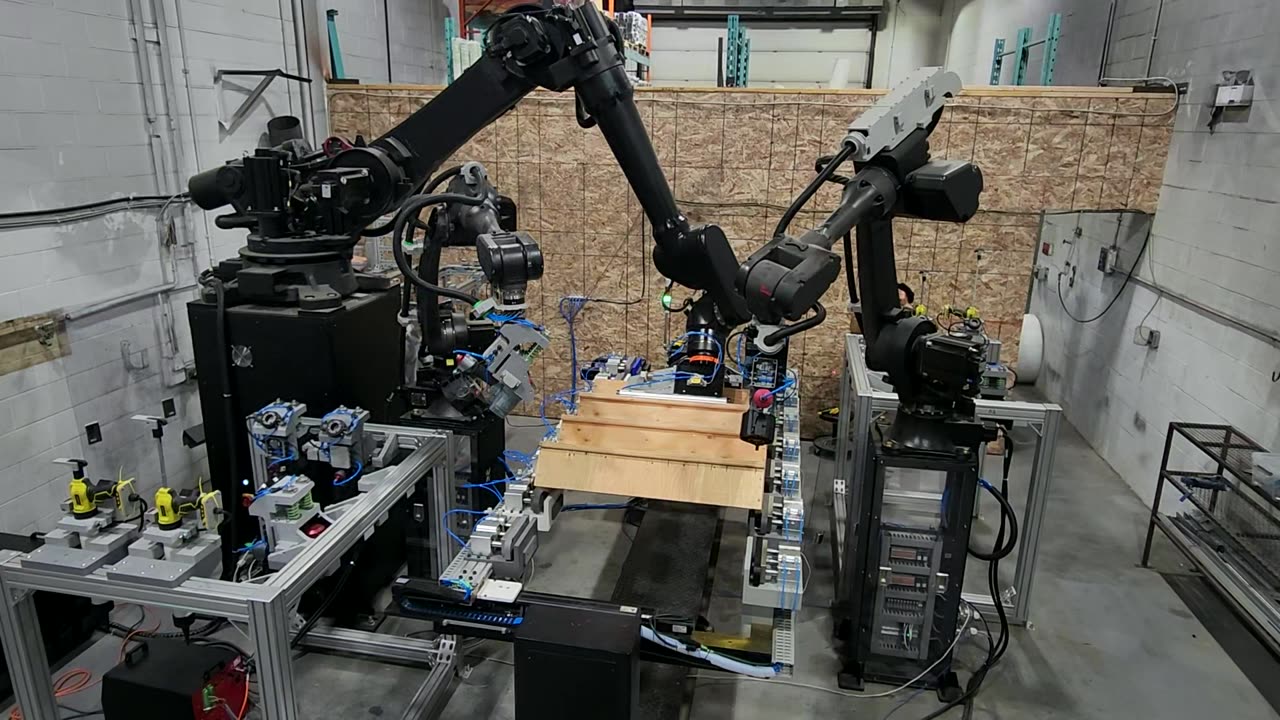
Three robots assembling a wooden staircase in the Stairbotics prototype cell
World first · Developed in Edmonton, Alberta, Canada

Robotic assembly of custom wooden staircases.

Every staircase is different. Stairbotics pairs a robotic assembly cell with software that generates the design, the drawings, the CNC program and the robot program for each one.
4.8Mhomes needed in Canada within the next decadeSource CMHC
270,000construction workers retiring by 2034Source BuildForce Canada
−37%residential construction productivity, 2001 to 2023Source Statistics Canada

Every home, school and commercial building needs staircases.

They are still assembled by hand, and no two are the same.

The software

Every staircase starts as a few numbers.

Risers, width, rise and run. Keep scrolling to hand this specification to the software.

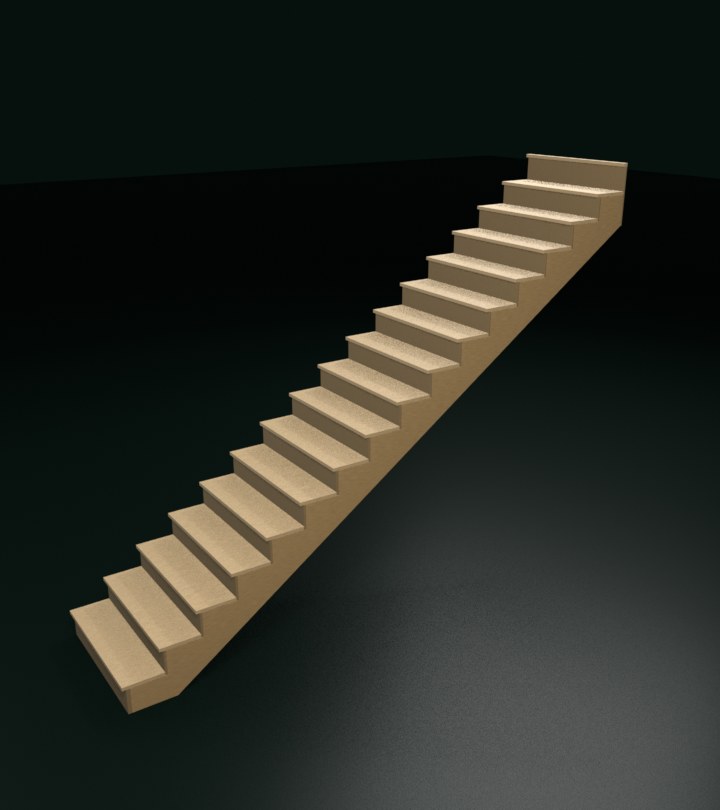
3D model of the staircase for the current specification
Staircase A
Risers17
Width40.0 in
Rise7.00 in
Run10.0 in

Four numbers go in.
Five outputs come out.

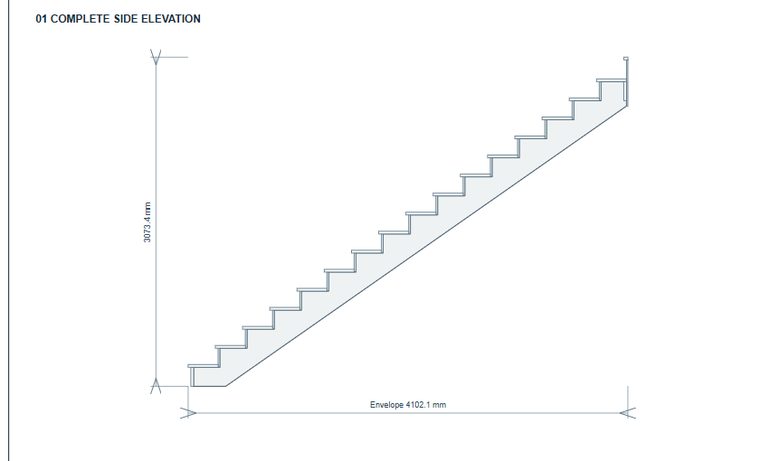
Drawings
Elevation drawing generated for the current specification
Cut list
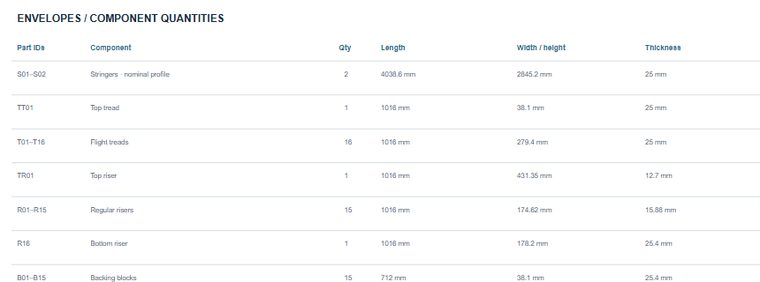
Parts schedule generated for the current specification
Stringer nesting
CNC program
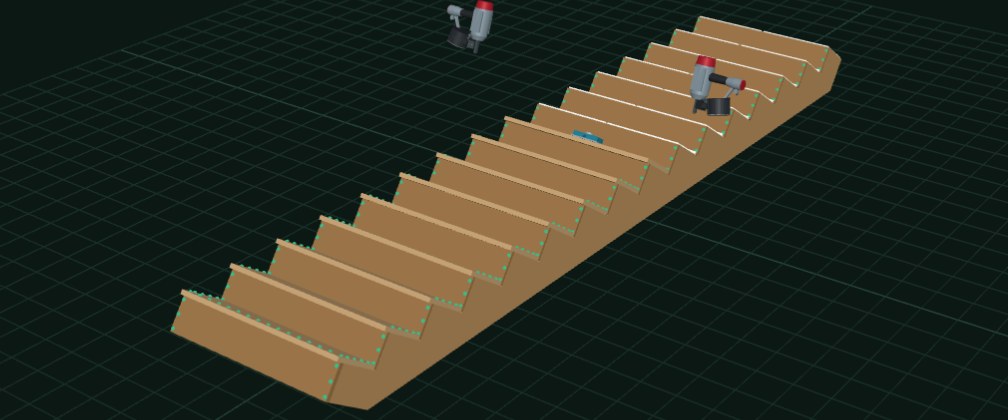
Robot programsimulated
Simulation of the nail guns and gripper assembling a staircase with this number of risers

No programmer in the loop. Every output is generated from the specification.

Try the technology

Specify any staircase and generate its full production package.

In the live demonstration you choose the dimensions and see what the Stairbotics software generated for exactly that staircase: the drawings, the cut list, the stringer nesting, the CNC program, the robot program and a simulation of the tools assembling it.

  1. 1. Choose the dimensionsRisers, width, rise and run.
  2. 2. Get the packageDrawings, cut list, nesting and both machine programs.
  3. 3. Watch the assemblyA simulation of the tools building that staircase.
Open the live demonstration
The cell · Phase 2 working prototype

Three robots assemble the staircase the software described.

One robot handles the boards. Two more glue and nail. Each motion is planned in simulation first, then run on the cell.

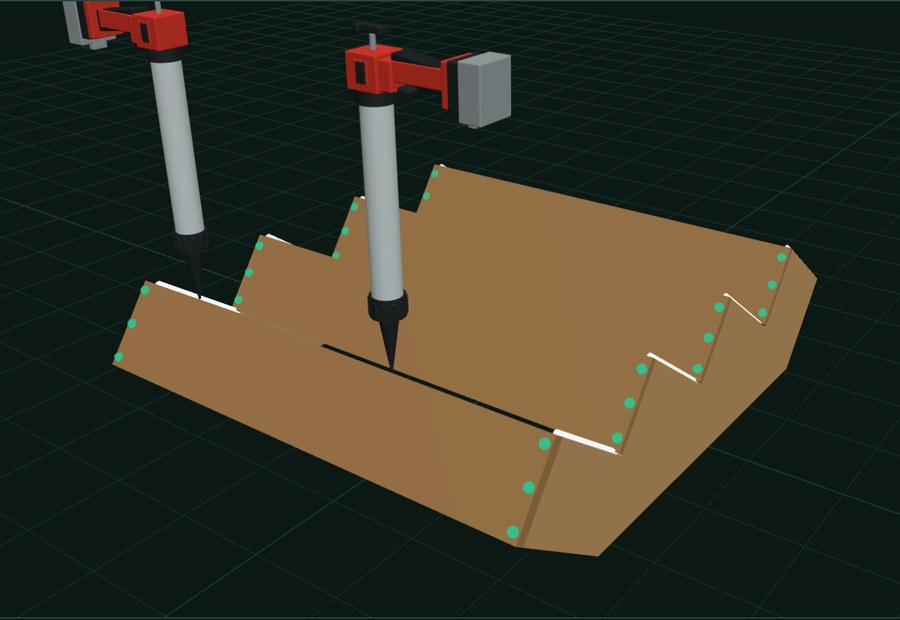
Simulation of two glue guns laying glue on the staircase
Planned in simulationTool paths generated from the staircase parameters
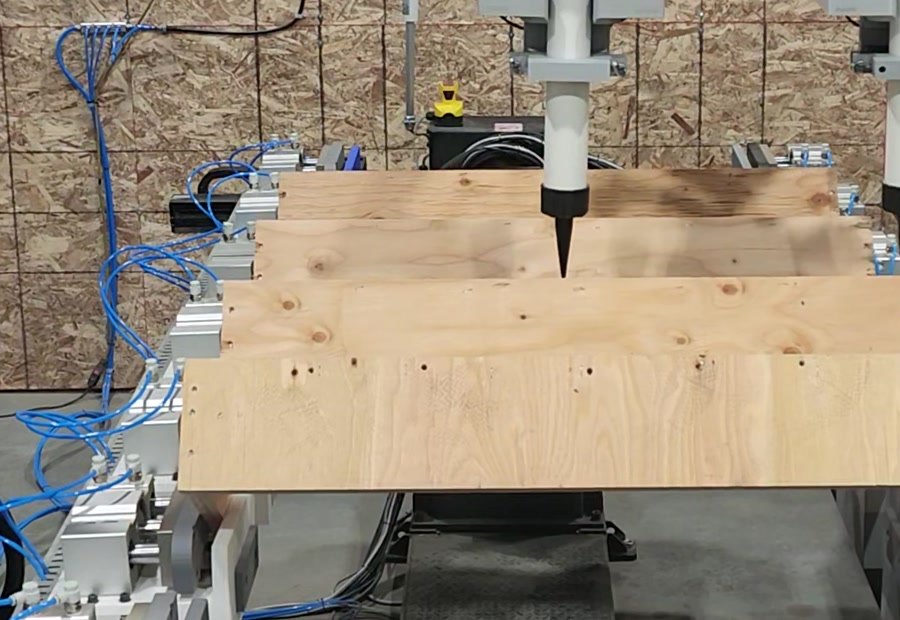
Two glue guns on the real cell laying glue on the staircase
Run on the cellThe same step on the prototype in Edmonton
Three robots, one staircaseOne holds the board while two fasten it
Every board is measuredLasers check how it sits in the gripper before it is placed
Placed at the corrected positionThe robot adjusts for each board
GlueLaid where the treads will sit
NailsTwo robots working in step
Automatic tool changesGlue gun and nail guns, picked up by the robots themselves
The cell

Then the whole staircase is turned over.

Keep scrolling to rotate it. The cell flips the assembled staircase so the robots can nail the underside.

The assembled staircase rotating on the cell's positioner
The film

The whole story in under five minutes.

The Stairbotics prototype cell, from the videoWatch the video
The roadmap

From a single robot to a production line.

Technology readiness level
  1. 1
  2. 2
  3. 3
  4. 4
  5. 5
  6. 6
  7. 7
TRL 7 todayPrototype demonstrated in a production environment.
TRL 8 to 9 nextPhase 3: the production line, completed, qualified and in operation.
Levels follow the Government of Canada technology readiness scale, 1 to 9.
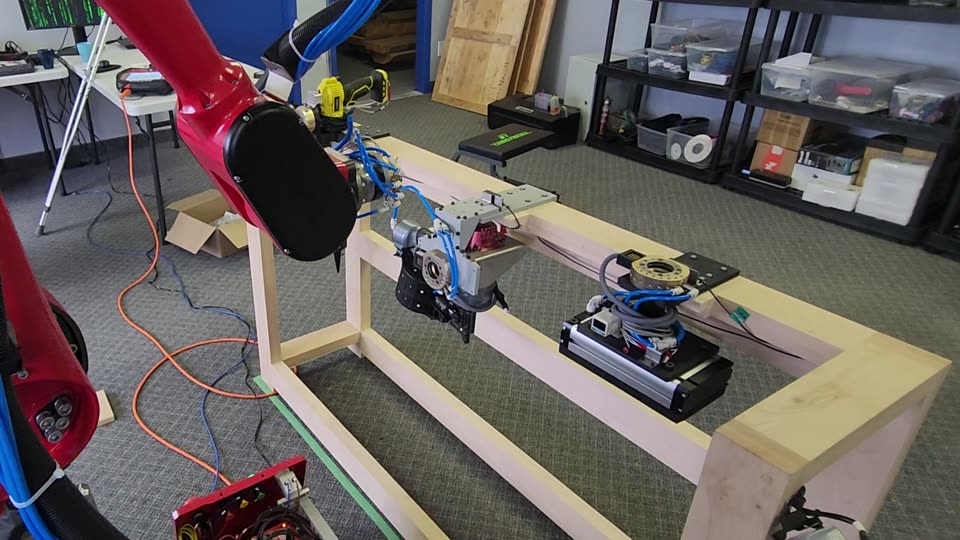
A single robot testing tools in a workshop
Phase 1

One robot

Proving the tools: the gripper, the nail gun and the glue gun.

Reached TRL 4

Complete
The three-robot prototype cell
Phase 2

Three-robot prototype cell

Assembles a complete staircase, driven by programs the software generates.

TRL 7 today

Working prototype
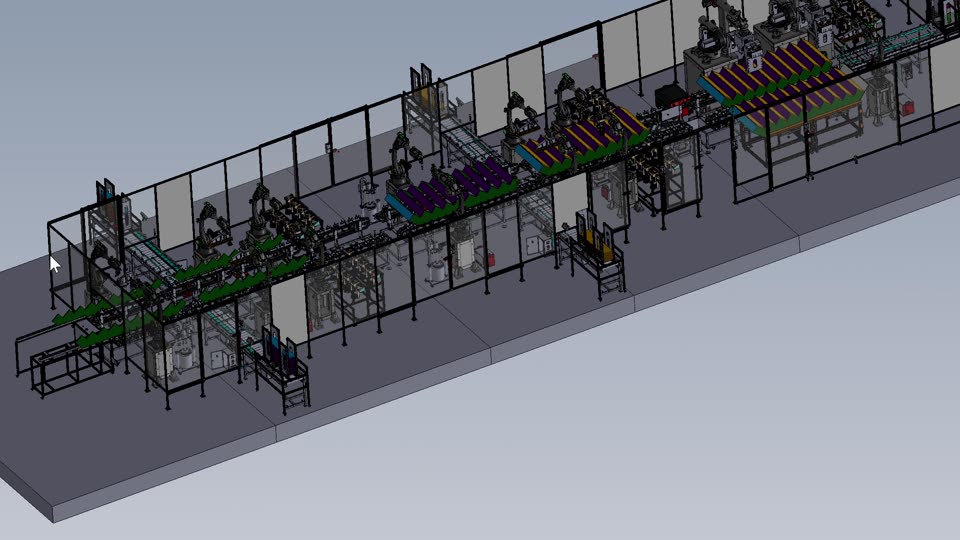
CAD model of the planned staircase production line
Phase 3

Production line

Stations in sequence, one specialised robot per task, with no tool changes. The same software drives the whole line.

The first design stage is complete. Next, the major components are verified with their suppliers before purchasing.

Target TRL 8 to 9

In design
Proven today

A working prototype, not a concept.

Why it matters

Built in Canada, for a Canadian problem.

Housing supply

Stairs are in every home Canada needs to build. Automating their assembly removes one hand-built bottleneck.

Skilled trades

As experienced workers retire, robots can take on the repetitive assembly and leave people the skilled work.

Canadian technology

The software and the cell were developed in Edmonton, Alberta, by a team that builds machines.

See it running

Come and watch the cell build a staircase.

We are looking for partners and funders to take Stairbotics from a working prototype to a production line. Demonstrations are by appointment in Edmonton, Alberta.

To arrange a visit or ask a question, write to hello@stairbotics.com.

Watch the videoTry the technology